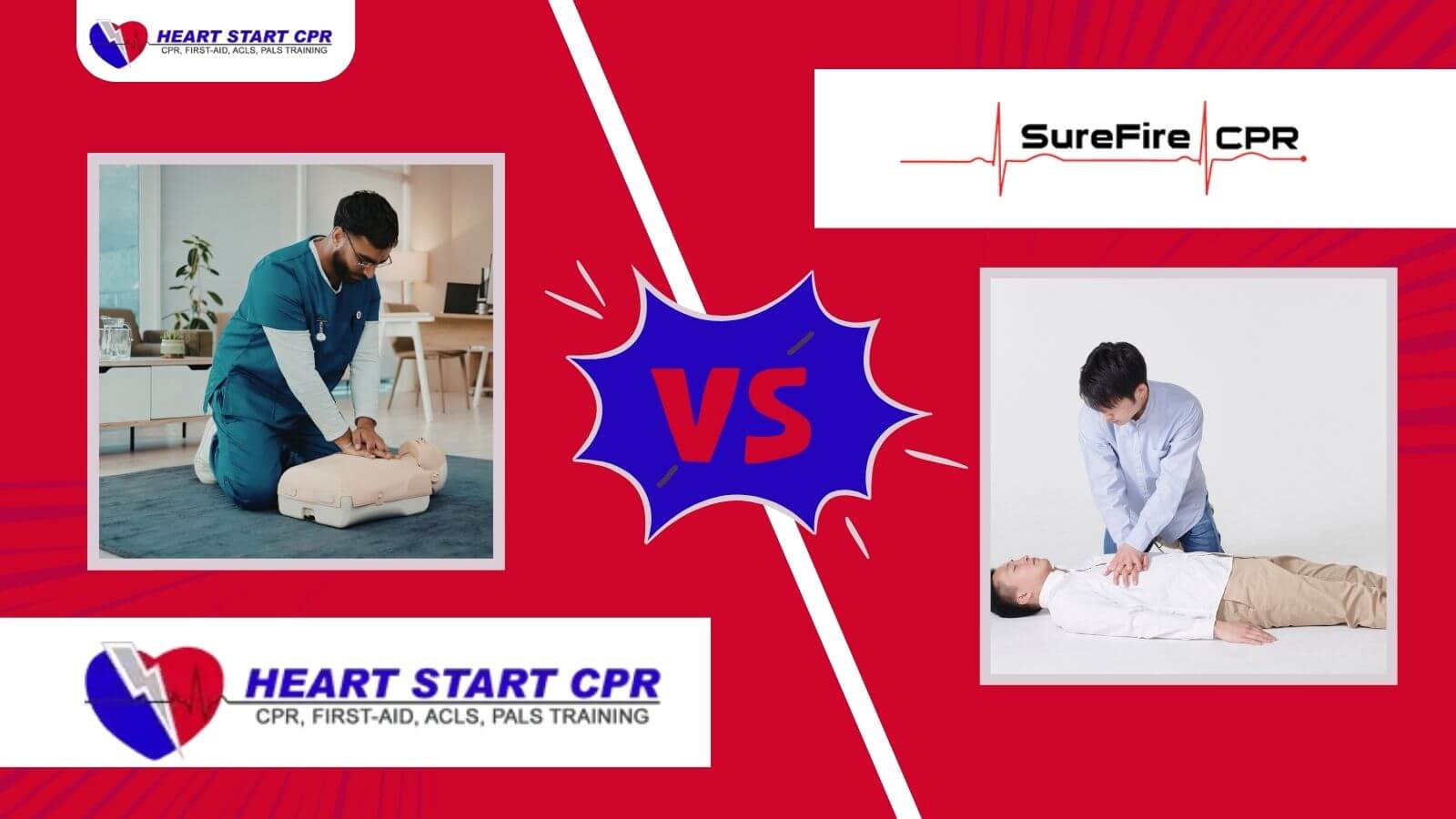
If you’re comparing Heart Start CPR and SureFire CPR, you’re likely looking for a certification that is not only valid but also prepares you to act confidently in a real emergency.
Both providers offer American Heart Association (AHA)–aligned CPR certification, including blended learning options (online coursework + in-person skills sessions). But the way training is delivered, and how well you retain those skills, can vary significantly.
This guide breaks down the real differences so you can choose the right option.
Quick Comparison: Heart Start CPR vs SureFire CPR
| Feature | Heart Start CPR | SureFire CPR |
| Training Style | Instructor-led + blended options | Hybrid |
| Course Formats | Classroom, Online + Skills, Skills Only | Online + skills session |
| Instructors | Firefighters, EMTs, paramedics | Firefighters, EMTs, paramedics |
| Hands-On Practice | Guided with real-time feedback | Short, self-directed session |
| Scheduling | Structured + flexible options | Highly flexible (24/7) |
| Certification | Same-day AHA eCard | Same-day AHA eCard |
| Primary Focus | Speed, Skill mastery & confidence | Speed & convenience |
Heart Start CPR: Flexible Training with Instructor Support
Heart Start CPR, founded in 2003, offers multiple training formats, including traditional classroom training and blended learning options such as:
- BLS Online + Skills Session
- Skills-Only sessions (for renewals or experienced students), which usually last 30 minutes
What makes Heart Start CPR different:
What sets Heart Start CPR apart is not just the certification itself, but the way training is delivered. Along with flexible course formats, Heart Start CPR emphasizes guided instruction, practical skill development, and support designed to help students feel prepared in real emergencies.
Instructor Involvement Throughout the Process
Even in blended learning courses, students receive instructor guidance and feedback during the in-person skills session, helping reinforce proper technique and confidence.
Hands-On Training with Real-Time Correction
Training includes practical, hands-on instruction with real-time coaching, so students can improve technique, ask questions, and build comfort performing CPR skills.
Courses Taught by Emergency Professionals
Classes are led by firefighters, EMTs, and paramedics who bring real-world emergency response experience into the training environment.
Flexible Learning Formats Based on Your Needs
Students can choose the format that fits their schedule, learning style, and experience level:
- Traditional Classroom Training
Ideal for new learners or anyone who prefers in-depth, instructor-led education with extensive hands-on practice. - Blended Learning (Online + Skills Session)
A flexible option that lets you complete the cognitive portion at your own pace before attending a short in-person skills session. - Skills-Only Sessions
A streamlined option for students who have already completed online coursework or experienced learners seeking efficient skills verification.
Whether you prefer a comprehensive classroom experience or a faster blended option, Heart Start CPR offers flexibility without sacrificing instructor support.
SureFire CPR: Fast and Self-Paced Certification
SureFire CPR, founded in 2009, also offers a hybrid learning model that includes:
- Online coursework completed at your own pace
- Short, in-person skills verification session
- 24/7 scheduling options
The focus is on fast, flexible certification designed for convenience and efficiency.
The Real Difference: Guidance vs Speed
Since both providers offer blended learning, the key difference isn’t format—it’s how the training is delivered.
Heart Start CPR
- Instructor-guided skills sessions for beginners
- Real-time feedback and correction
- Emphasis on proper technique and repetition
- Strong focus on confidence
- Multiple training options are available, including traditional classroom training for in-depth, instructor-led learning, as well as blended learning and skills-only sessions for those seeking a more flexible or faster path to certification.
SureFire CPR
- Shorter, faster skills sessions
- More self-directed learning
- Limited instructor interaction
- Focus on efficiency
In simple terms:
- Heart Start CPR = Supported and smooth learning experience with multiple options available
- SureFire CPR = Faster, more independent process
Why Hands-On Guidance Matters
CPR is not just knowledge; it’s a physical skill.
Even in blended courses, what matters most is:
- How much feedback do you receive
- How well your technique is corrected
- How confident do you feel performing the steps
A short, unguided session may complete the requirement, but may not fully prepare you for a real emergency.
Who Should Choose Heart Start CPR?
Heart Start CPR is the better choice if you:
- Want flexible options with instructor support
- Are new to CPR or want to improve confidence
- Prefer guided, hands-on learning
- Prefer fast blended learning options
- Want a fast certification renewal process
- Value real-world insight from emergency professionals
Who Should Choose SureFire CPR?
SureFire CPR may be a better fit if you:
- Need certification as quickly as possible
- Prefer a highly self-paced process
- Are renewing and already confident in your skills
- Want maximum scheduling flexibility
Final Verdict
Both Heart Start CPR and SureFire CPR offer valid, AHA-compliant certification and blended learning options.
The difference comes down to how you learn best:
- SureFire CPR focuses on speed and convenience
- Heart Start CPR offers flexibility with guided, hands-on support
If your goal is to simply complete certification quickly, either option may work.
If your goal is to feel confident performing CPR in a real emergency, the level of instruction and feedback makes a real difference, and that’s where Heart Start CPR stands out.