


One of the driving factors that determine the effectiveness of CPR is the proper hand placement. While performing hands-only CPR on the person, the success rate of survival and effectiveness of CPR are entirely dependent on the hand position.
Here, we will discuss precisely where to put your hands for CPR, how to posture your body, and some pointers to guarantee you are performing high-quality chest compressions as part of this critical emergency procedure.
What is Hand Position in CPR?
Hand position in CPR refers to how you place your hands on the chest before starting compressions. Correct placement ensures effective chest compressions, which are essential for saving lives.
Proper hand placement is especially important in hands-only CPR. Incorrect positioning can reduce the effectiveness of compressions and lower the chances of survival. That’s why CPR should be performed only by those trained, certified, or who have practiced both compressions and rescue breaths on mannequins or training devices.
Importance of Correct CPR Hand Position in Adults, Children, and Infants
Proper hand position plays a crucial role while performing CPR. It boosts survival and safety for adults, children, and infants by ensuring effective compressions while minimizing injury.
Some of the importance of proper hand position in CPR are as follows:
1. Effective Blood Flow: Placing hands on the lower half of the breastbone ensures chest compressions push oxygen-rich blood to vital organs efficiently, simulating the heart’s natural pumping.
2. Maximized Compression Effectiveness: The right-hand position, combined with proper depth and rhythm, makes each compression as effective as possible, improving the chances of survival.
3. Reduced Risk of Injury: Correct hand placement helps avoid pressure on the ribs or other delicate areas, lowering the risk of fractures or internal organ damage.
4. Adaptable for Different Ages: Hand position and pressure should be adjusted depending on the age and size of the person receiving CPR to ensure both safety and effectiveness.
CPR Hand Placement for Adult
When performing CPR, a common question is, “Where do you place your hands for CPR?” For providing CPR to the adult age group, there are several important considerations. The key steps to follow when giving chest compressions to an adult, with the proper hand position, are as follows:
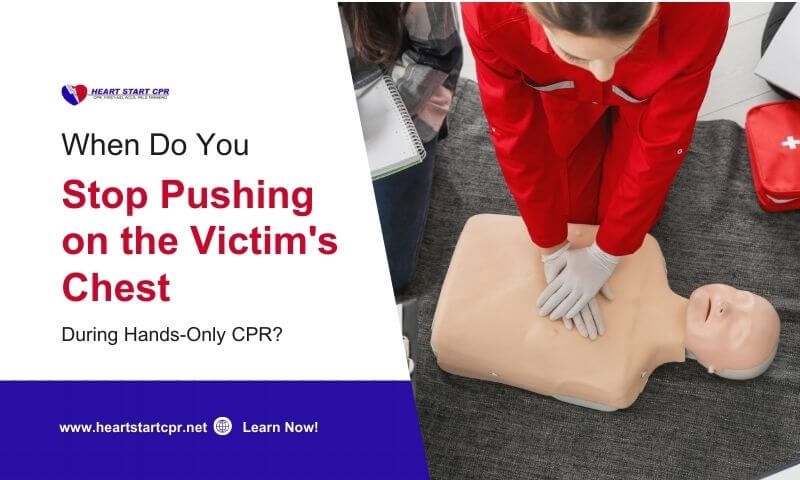
- For Adult CPR, the hand position should be exactly in the center of the chest or slightly above the sternum.
- You need to position the heel of one hand in the center of the chest and the heel of the other hand directly on top by interlocking your fingers.
- Then, position your shoulders directly over your hands by keeping your arms straight.
- Now, you need to push straight down at least 2 inches deep at the rate of 100-120 compressions per minute.
After following these chest compression steps, allow the chest to fully rise and avoid lifting your hands from the chest. Do not lean on the chest during the chest compressions. You should continue the process until the victim shows any sign of life or any professional help arrives.
CPR Hand Placement for Children and Infants
The purpose of CPR for children and infants is the same, but different techniques are used, such as hand placement, finger positioning, and the amount of pressure applied. The children and infants have slightly delicate bodies as compared to adults. So, when performing CPR with correct hand placement for children and infants, we need to consider several things to ensure effective application of this first aid technique.
Also read: What Is the Target Rate for Chest Compressions for Children?
For children aged from 1 year to puberty:
Depending on the age and size of the child, hand placement for child CPR may involve using either a single hand or both hands for chest compressions.
- Place the heel of your hand just above the center of the chest or just above the sternum.
- Position your shoulder directly over your hand, and keep your arm straight.
- Push down at least 2 inches deep at the rate of at least 100-120 compressions per minute.
- Use both hands if you get tired during compression and do not stop the process.
For children younger than 1 year old (Infants):
- Be very careful with infant CPR hand placement. Use two fingers or the 2-thumb encircling hands technique as an alternative for effective chest compressions.
- Place your fingers just below the nipple line.
- Push down at least ep at the 1.5 inches derate of 100 compressions per minute, as an infant’s body size is relatively smaller to children.
- As per the recommendation of AHA, mouth-to-mouth resuscitation is more important for infants and children. So, it is suggested to provide both of them in the correct ratio.
- Continue the process until the breathing of the infant is normal or until professional help arrives.
Related Post: How Can You Achieve High Chest Compression Fraction
Differences of Hand Placement in CPR for Adults, Children, and Infants
Based on the age of the victim needing CPR, the CPR hand position and amount of pressure slightly vary. There are different processes and approaches to hand placement in CPR for adults, children, and infants.
1. Adults: Both hands on the center of the chest with compressions 2 in (5 cm) at ≥100/min.
2. Children: One hand on the center of the chest and compress 2 in (5 cm) at ≥100/min.
3. Infants: Two fingers below nipple line and compress 1.5 in (4 cm) at ≥100/min.
Complications of Improper Hand Placement During CPR
Improper hand placement during CPR can cause serious complications, such as broken ribs, injury to vital organs, and ineffective chest compressions, reducing the chances of survival.
Some of the complications are as follows:
1. Rib Fractures and Injuries: Placing hands too high or using too much pressure can break ribs and damage nearby organs.
2. Poor Blood Circulation: Incorrect placement often leads to shallow compressions, reducing blood flow to vital organs.
3. Lower Survival Chances: Inadequate technique weakens the effectiveness of CPR, making it harder to save the person’s life.
Related Post: CPR Recovery Position
Summary
In a cardiac emergency, the first thing you need to do is act quickly. But how do you ensure your CPR is effective? It all starts with proper hand placement. By considering the victim’s age and body size, you can ensure your compressions are deep enough and positioned correctly to increase survival chances.
But here’s the thing. If you’re not properly trained, even good intentions can fall short. If you are involved in CPR training, you gain the skills and confidence needed to perform it accurately every time.
So, what should you do next? CPR Training and practice are key if you want to be fully prepared for any cardiac emergency. Join Heart Start CPR today and master life-saving techniques tailored for different age groups and body sizes. Don’t wait for an emergency to learn—be prepared and confident in any situation.
FAQs
What Is Sternum and Its Importance in Hand Placement?
The sternum is a flat bone located in the center of the chest, also known as the breastbone, that protects our vital organs like the heart and lungs. While performing CPR, placing your hands just above the sternum increases the effectiveness of CPR by optimizing blood circulation throughout the body and avoiding the risk of getting rib injuries.
How Many Hands Should I Use During CPR?
Depending on the victim’s age and the amount of pressure required, one should consider using either single or both hands. While performing CPR for adults, it is recommended to use both hands, whereas for children, it is recommended to use only one hand. For infants, you must only use your fingers to perform CPR as they have very fragile bones.
Why is Mouth-To-Mouth No Longer Recommended?
Hands-only CPR helps to sustain blood circulation more effectively during cardiac arrest than mouth-to-mouth resuscitation. It also interrupts the assisted flow of blood when including rescue breath while performing chest compression. So, stopping chest compression in order to perform mouth-to-mouth will interrupt the flow and may result in a greater risk.
When to Stop CPR?
You should only stop performing CPR when the casualty shows signs of life, like movement, coughing, or opening their eyes. Do not stop CPR until professional medical help arrives and takes over.
Where Do You Put the Palm of Your Hand at the Center of the Chest?
You need to place the palm of your hand on the center of the chest, specifically on the lower half of the sternum (breastbone). For adults and children, use a one-hand placement by placing the heel of one hand in the center of the chest, with your fingers extended and not touching the chest. For infants, use a two-finger placement by placing your two fingers just below the nipple line, in the center of the chest. You need to make sure that your hands are positioned correctly to provide effective compressions without causing harm.